Surfing History: From Ancient Polynesia to Modern Performance
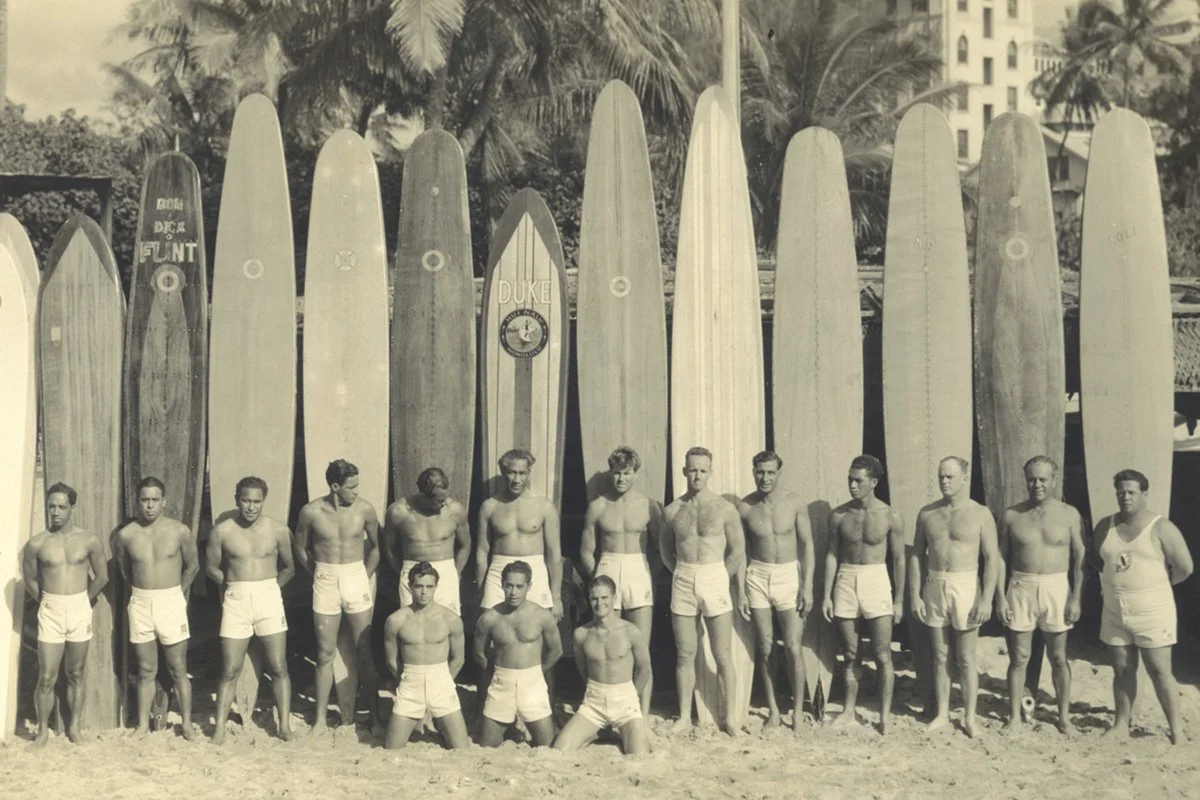
Surfing did not start as a sport. It started as a way of living with the ocean.
Long before scorelines, contests, or performance metrics, riding waves was part of daily life in the Pacific. It carried meaning, hierarchy, ritual, and identity. To understand modern surfing, you have to begin there, far from wetsuits and fiberglass boards.
You have to begin in Polynesia.
Surfing before it had a name
The earliest roots of surfing trace back over a thousand years to the islands of Polynesia.
For Polynesian cultures, wave riding was not a hobby. It was woven into society. Chiefs, commoners, men, women, and children all surfed, often on boards carved from local trees. Skill in the water earned respect. Certain waves were reserved for people of status. Surfing was tied to spirituality, storytelling, and a deep understanding of the ocean. When Polynesians settled in places like Hawaii, surfing became even more central. Known as he‘e nalu, or wave sliding, it reflected harmony between humans and nature. Ocean knowledge was passed down through generations, not written manuals.
This was surfing in its purest form:
No spectators.
No industry.
No separation between surfer and sea.
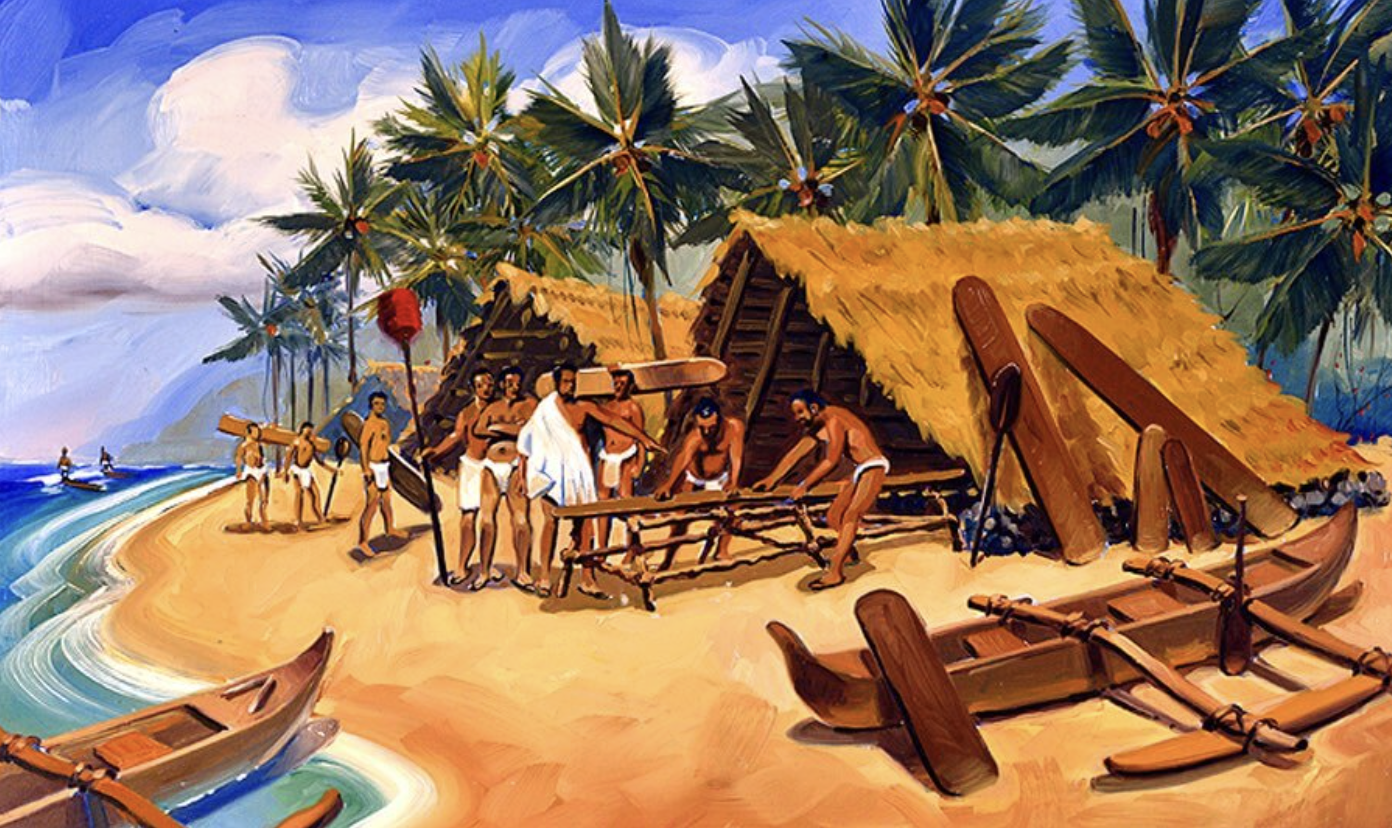
Anscient surfboard factoryu. Art by Ron Croci.
The arrival of outsiders and the near disappearance of surfing
That balance did not last…In the late 18th and 19th centuries, European colonization brought dramatic cultural change to Hawaii and the wider Pacific. Missionaries discouraged surfing, viewing it as idle or immoral. Land use shifted. Traditional practices were suppressed.
By the late 1800s, surfing was close to disappearing. It survived largely because a small number of Hawaiians continued to practice it quietly, holding onto a tradition that refused to die. Without them, surfing as we know it would not exist.
The revival and the first modern surfers
The early 20th century marked a turning point.
One name stands above all others in the rebirth of surfing: Duke Kahanamoku. An Olympic swimmer and proud Hawaiian, Duke introduced surfing to the world through demonstrations across the United States, Australia, and beyond. He didn’t sell surfing. He shared it.
As surfing spread to places like California and Australia, it began to change. Boards became lighter. Shapes evolved. Surfing slowly shifted from cultural practice to recreational activity.
Still, the spirit of the ocean-first mindset remained, even as the audience grew.
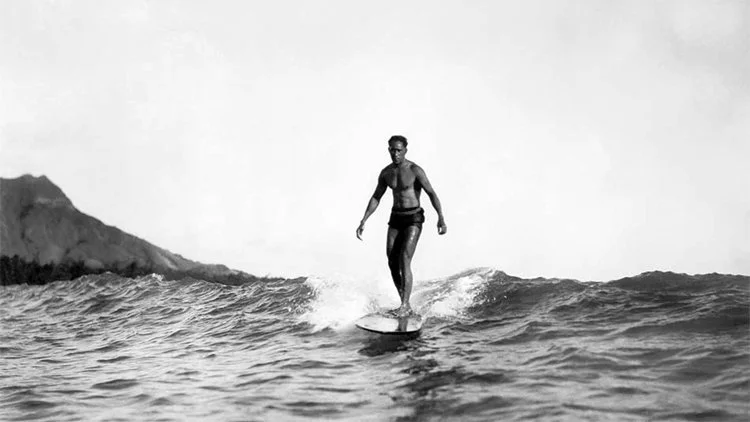
Duke Kahanamoku
Photo: Underwood Photo Archives
Surfing becomes a lifestyle
By the 1950s and 60s, surfing exploded. Post-war optimism, coastal living, and youth culture transformed surfing into a symbol of freedom. Movies, magazines, and music helped push the image of the surfer into mainstream consciousness.
This period also saw major changes in equipment. Heavy wooden boards gave way to fiberglass and foam. Boards became shorter, faster, and easier to maneuver. For the first time, surfers could truly experiment with turns, speed, and style.
Surfing was no longer just about riding straight to the beach. It became expressive.
This era laid the foundation for modern performance surfing, even if the image often drifted far from surfing’s original roots.
The shortboard revolution and performance surfing
The late 1960s and 70s changed everything again. The shortboard revolution marked a shift from long, flowing lines to tight, aggressive turns. Surfers began pushing limits, riding steeper sections and more critical parts of the wave. With this shift came a new mindset. Progression mattered. Innovation mattered. Individual style became a signature.
Surfing was no longer just something you did. It was something you refined.
At the same time, surf culture diversified. Some surfers chased performance. Others chased freedom, travel, and exploration. Both paths shaped what surfing would become.
Competition enters the picture
Competitive surfing existed early on, but it wasn’t until the late 20th century that it became structured and global. Organized tours, judging criteria, and professional careers created a new pathway. Surfing could now be a profession, not just a passion.
Today, that evolution lives through organizations like the World Surf League, where the best surfers in the world compete in waves that demand precision, power, and adaptability. Modern competitive surfing showcases what is physically possible on a wave. It represents the peak of performance.
But competition is only one branch of surfing’s history, not the whole tree.
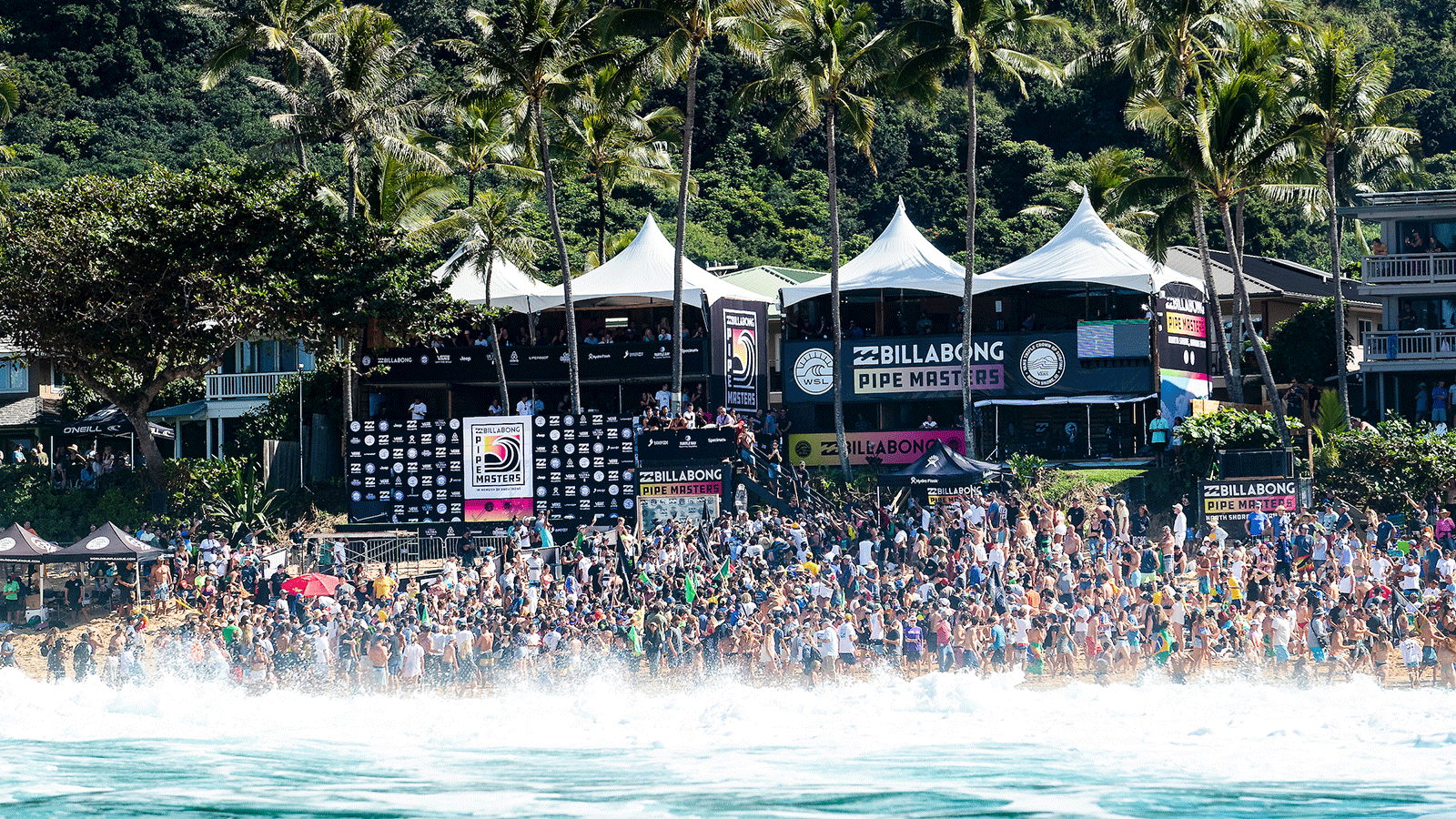
Iconic event in Hawaiii: The Pipe Masters.
The parallel worlds of modern surfing
Modern surfing exists in multiple worlds at once. There is high-performance surfing, driven by athleticism, training, and competition.
There is free surfing, where creativity, flow, and personal connection take priority. There is travel surfing, exploration, big-wave surfing, longboarding, alternative shapes, and community-based surfing. All of these paths trace back to the same origin. All of them rely on the same ocean.
Understanding surfing history helps surfers see that there is no single correct way to surf. There is only progression, respect, and awareness of where it all began.
What surfing history teaches modern surfers
Looking back is not about nostalgia. It’s about perspective.
Surfing history reminds us that:
The ocean comes first
Equipment is a tool, not the point
Skill includes awareness, not just technique
Respect is as important as ability
For people learning to surf today, this context matters. It shapes how surfers approach lineups, other surfers, and the places they visit.
Surfing has always been shared. It only works when that sharing is respected.
From ancient practice to modern learning
Modern surf instruction, equipment, and forecasting tools have made surfing more accessible than ever. That is a positive evolution.
But learning to surf is still more than standing up on a board.
It is learning:
How waves behave
How people interact in the lineup
How environments change
How patience and timing matter
Those lessons connect directly back to surfing’s origins, even if the boards and wetsuits look very different today.
A living history
Surfing history is not finished. It evolves with every generation, every new wave ridden, every coastline protected or damaged. Places like Ericeira, as a World Surfing Reserve, represent a modern attempt to protect surfing’s future by respecting its past.
The challenge now is balance.
Progress without forgetting. Growth without exploitation. Performance without losing connection.
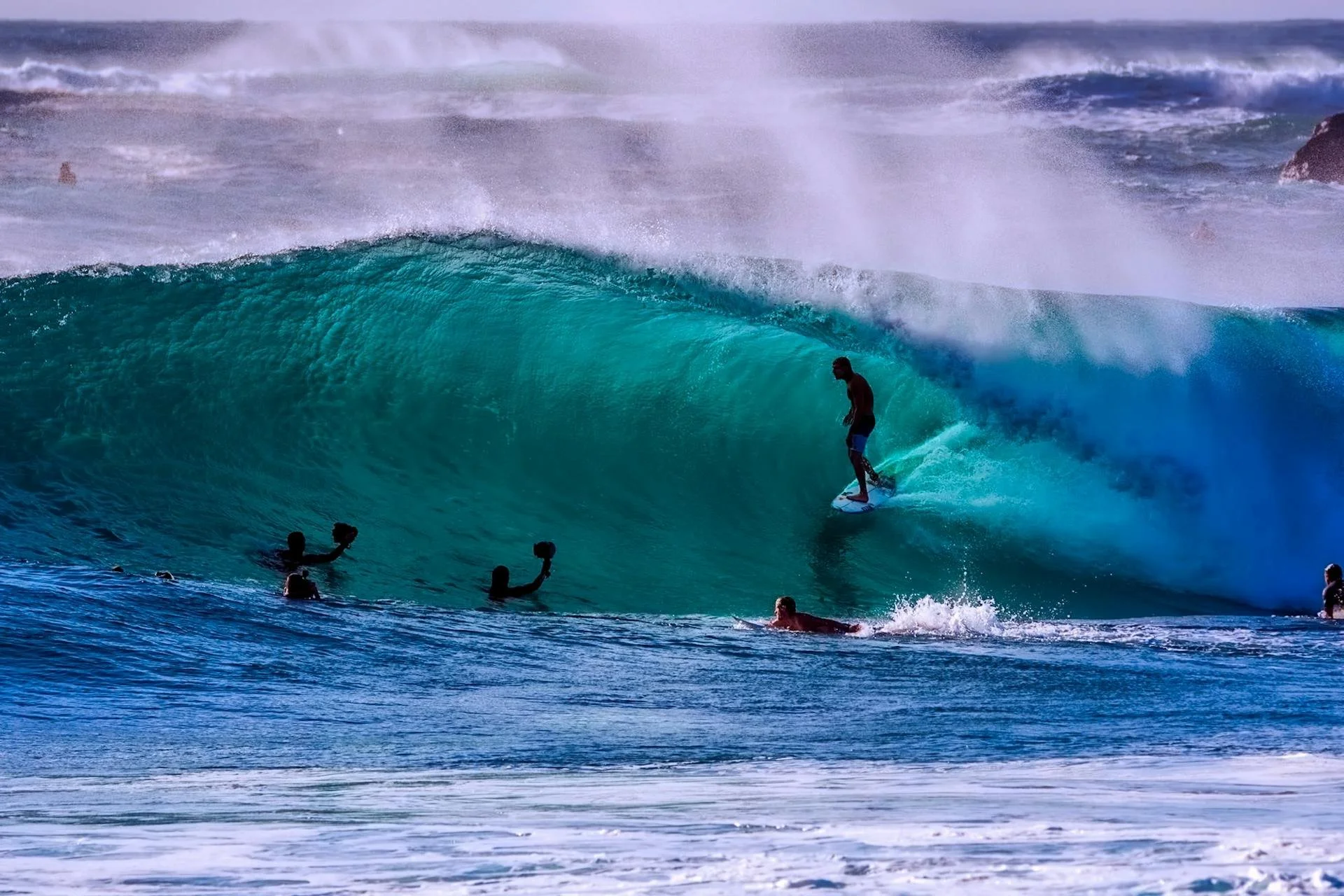
3x world champion Mick Fanning.
Final thought
Surfing has traveled a long way from its Polynesian roots. It has crossed oceans, cultures, and generations. It has survived suppression, commercialization, and constant reinvention. What remains constant is the relationship between surfer and wave.
Understanding the history of surfing does not make you a better surfer overnight. But it does make you a more conscious one.
And that awareness is where real progression begins.